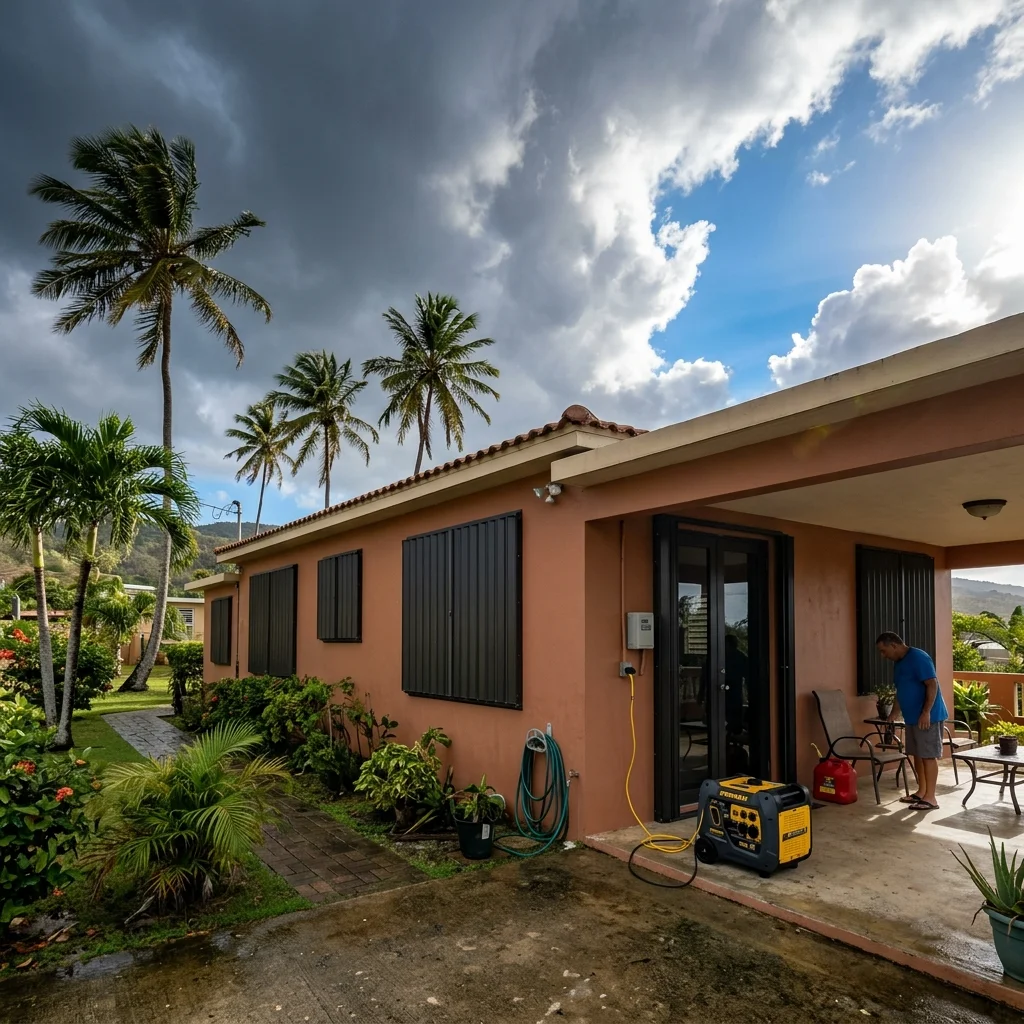
Hurricane Power Prep for Puerto Rico: Your Complete Backup Power Checklist
Preparing your hurricane season generators in Puerto Rico requires securing a reliable source of backup electricity. With storm winds capable of crippling the LUMA Energy distribution grid for weeks, homeowners must plan ahead. This guide outlines the hurricane season timeline, provides pre-storm maintenance checklists, offers safety rules for fuel storage, and highlights the benefits of dual-fuel generators and solar batteries. Read below to gain complete clarity on storm preparedness and how to maintain electrical security for your household.
Puerto Rico's Hurricane Season: June 1 – November 30
In the North Atlantic basin, including Puerto Rico and the wider Caribbean region, the official hurricane season begins on June 1st and ends on November 30th. Historically, the most severe hurricanes to strike the island—such as Hurricane Hugo (September 1989), Hurricane Georges (September 1998), Hurricane Maria (September 2017), and Hurricane Fiona (September 2022)—have occurred during the peak months of August and September. This historical storm frequency and seasonal data is maintained in the National Hurricane Center (NHC) archives. The concentration of storms during these peak months is due to warmer ocean temperatures and low wind shear, which provide ideal conditions for tropical development.
Preparing your emergency systems during the spring months (April and May) is highly recommended. Attempting to purchase generators, solar panels, or fuel canisters once a tropical storm watch is issued often results in sold-out inventory, panic buying, and long lines at local stores. By planning ahead and securing your backup system before the season begins, you ensure that you have your choice of high-quality equipment and can avoid the stress of last-minute preparations. Emergency items purchased during the off-season are also easier to ship and verify for correct operation.
Additionally, the start of the season serves as a reminder to perform annual checks on existing equipment. If you already own a generator, June is the time to run it, perform an oil change, inspect the spark plug, and verify that you have fresh fuel. Waiting until a storm is 48 hours away to discover that your generator's carburetor is clogged with stale gasoline can leave your household without power when it matters most. Consistent, proactive maintenance is the key to ensuring your emergency backup systems are operational during a crisis.
The LUMA Problem: Why Hurricanes Knock Out Power for Days or Weeks
Puerto Rico's electrical transmission lines run across mountainous terrain covered in dense tropical vegetation. When hurricane-force winds blow, falling trees and branches tear down lines and damage support towers. The island's geography, characterized by a central mountain range (Cordillera Central), makes accessing damaged transmission lines extremely difficult for repair crews after a storm, especially when roads are blocked by landslides. Consequently, restoring power to remote mountain communities like Utuado, Adjuntas, and Orocovis can take weeks or months.
Furthermore, the island's central power generation stations are located on the south coast (such as the Costa Sur and Aguirre plants), while the majority of the electrical load is in the northern metropolitan areas around San Juan. This geographic separation requires long transmission routes that cross the mountains, creating a highly vulnerable distribution loop. When a storm disrupts the transmission towers in the mountains, the entire metropolitan area is cut off from the generation source, causing massive, island-wide blackouts.
LUMA Energy, the private operator managing the island's transmission and distribution network, inherited an aging infrastructure that suffered from decades of deferred maintenance. Many substations lack modern protection systems, and transformers are operated near their capacity limits. When a hurricane makes landfall, these weak points fail immediately. Even after the storm passes, a lack of inventory for replacement parts and a shortage of specialized technicians can delay restoration efforts, forcing residents to rely on their own backup power systems for extended periods.
The Pre-Hurricane Power Prep Checklist
Before a hurricane approaches, perform the following maintenance and planning steps to ensure your backup power system operates safely and effectively. For a comprehensive disaster kit and preparedness checklist, review the FEMA emergency kit guidelines.
- Test Your Generator Monthly: Start your generator and run it under load (e.g., connect a space heater or other heavy appliance) for 15 to 20 minutes. This prevents moisture buildup in the alternator and ensures the engine starts easily when needed.
- Perform Regular Oil Changes: Most portable generators require an oil change every 50 to 100 hours of continuous operation. During a long blackout, this means changing the oil every 3 to 4 days. Keep at least 4 to 6 quarts of the recommended oil (typically 10W-30 or 5W-30 synthetic) and spare oil filters on hand.
- Inspect and Clean the Spark Plug: Remove the spark plug, inspect it for carbon buildup or damage, and clean or replace it. A bad spark plug is one of the most common reasons a generator will fail to start during an emergency.
- Secure Fuel Safely: Store gasoline in approved, color-coded canisters (red for gasoline) in a cool, well-ventilated area away from living spaces. Always use a fuel stabilizer to prevent gasoline from degrading over time.
- Plan Your Exhaust Safety Zone: Decide where your generator will run. It must be placed strictly outdoors, at least 20 feet away from windows, doors, and vents, with the exhaust pointing away from any structure to prevent deadly carbon monoxide buildup.
Choosing a Hurricane Generator for Puerto Rico
For storm backup, fuel flexibility is a primary consideration. Dual Fuel generators that run on both gasoline and propane are highly recommended for the Puerto Rico market. After a major hurricane, gasoline distribution often collapses due to power failures at pump stations and port disruptions, leading to rationing and multi-hour lines. Propane (LPG) provides a reliable alternative, as it does not degrade over time and is widely stored in tanks for household cooking and water heating.
Additionally, choosing an inverter model is critical for residential safety and efficiency. Inverter generators produce clean electricity with low Total Harmonic Distortion (THD), which is safe for sensitive electronics like laptops, smartphones, and medical devices. They also adjust their engine speed to match the electrical load, saving significant amounts of fuel. In contrast, conventional generators run at a constant speed and burn fuel at a high rate regardless of the load, which can quickly drain your fuel supply during a prolonged outage.
Portability and housing are also important. Hurricanes bring heavy rain and high winds. Your generator should be equipped with a heavy-duty frame and wheels, making it easy to move into a secure garage or shelter when the storm is active, and roll back out once it passes. Never run a generator in an enclosed space, and ensure it is covered by a specialized generator tent or open canopy to protect the electrical outlets from rain while maintaining proper ventilation.
Fuel Storage for Hurricane Season in Puerto Rico
Storing fuel safely is a critical component of storm preparation. Homeowners must adhere to local safety regulations and storage limits to prevent fire hazards and ensure fuel remains usable.
Fuel Stabilizer usage: Untreated gasoline begins to degrade in as little as 30 days, forming gum and varnish that can clog a generator's carburetor. Always add a high-quality fuel stabilizer to gasoline immediately after purchasing it. This keeps the fuel fresh for up to 12 months, allowing you to store gasoline safely throughout the hurricane season.
Propane Cylinders: Liquid propane (LPG) is an exceptionally safe fuel for long-term storage because it does not degrade and is sealed in heavy-duty steel tanks. A standard 20 lb propane tank (commonly used for grills) provides about 10 to 15 hours of run time on a mid-sized inverter generator. Larger 100 lb cylinders can be mounted securely outside your home, providing days of continuous power without refueling.
Refueling and Fire Safety: Never add fuel to a running or hot generator. Spilled gasoline on a hot muffler can ignite instantly, causing catastrophic fires. Always turn the generator off and let it cool for at least 15 minutes before refueling. Keep a Class B fire extinguisher nearby, and store fuel canisters at least 50 feet away from the operating generator.
Solar + Battery as Hurricane Backup: What to Know
Solar power stations, commonly referred to as solar generators, offer significant advantages during hurricane recovery. Once a storm passes and sunny conditions return, solar panels can recharge your battery backup daily, providing a clean, self-sustaining energy source. Unlike gasoline generators, solar systems operate completely silently and do not require fuel storage. This eliminates the need to stand in long fuel lines and avoids the noise associated with combustion engines.
When preparing for a hurricane, your solar panels must be handled with care. Rigid panels mounted on rooftops should be built to withstand hurricane-force winds, or uninstalled and stored indoors before the storm makes landfall. Portable, foldable solar panels are the ideal choice for emergency prep, as they can be kept safely in their protective cases inside your home during the storm, and set up in your yard or balcony immediately afterward.
Additionally, battery power stations are completely safe to operate indoors. During the peak of a storm, when wind and rain make it impossible to run a gasoline generator outside, you can run a battery power station inside your living room to keep lights, fans, cell phones, and medical equipment running. This immediate, safe indoor power is a major advantage that gasoline generators cannot provide, making solar battery backups an essential part of a comprehensive hurricane preparation plan.


