
Battery Power Stations
OUKITEL BP3000 3200W / 2048Wh LiFePO4 Portable Power Station
3,200W
6400W Surge
2,048Wh
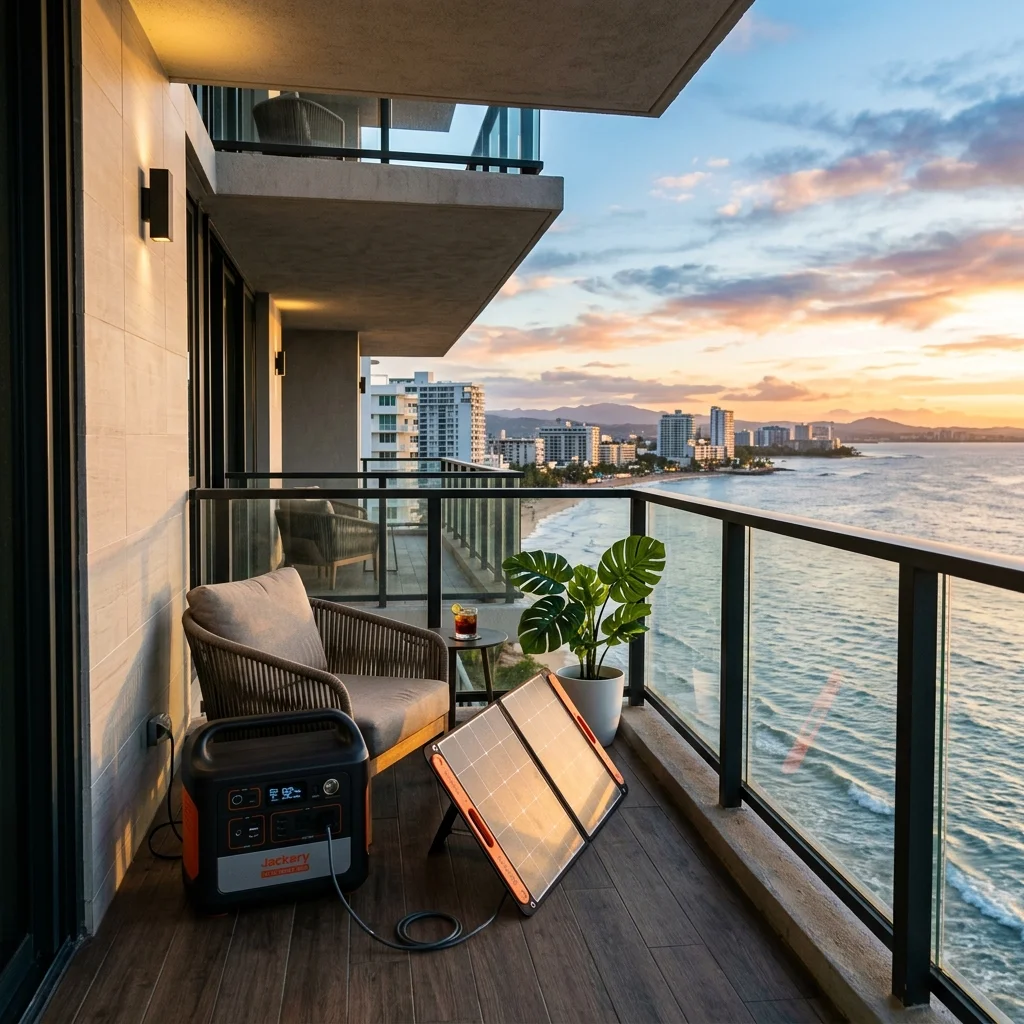
Apartment and condominium residents in Puerto Rico face unique challenges during power outages. Due to strict building regulations and the hazards of carbon monoxide, traditional gasoline generators are not an option. Buying a portable power station in Puerto Rico provides a clean, silent, and indoor-safe backup system. This guide analyzes how battery backups operate, calculates apartment power requirements, explains balcony solar charging, and reviews tax-free pricing for local residents.
In high-rise buildings and multi-family complexes across Puerto Rico, traditional backup power methods are impractical. Homeowners in single-family houses can place a gas generator in their yard, but apartment dwellers do not have this option. Condominium rules and safety codes prohibit running combustion engines on balconies due to the risk of carbon monoxide poisoning, noise complaints, and fire hazards from stored fuel. These safety limits are monitored and enforced under guidelines from the Puerto Rico Department of Consumer Affairs (DACO).
Living in an apartment in San Juan, Bayamón, or Ponce during a LUMA Energy blackout requires a power source that can operate safely inside a closed apartment. Traditional open-frame gas generators produce high levels of carbon monoxide (CO), an odorless, colorless gas that is lethal when accumulated in confined spaces. Because balconies are closely connected to windows and doors, exhaust fumes can easily seep back into the apartment or drift into neighboring units, endangering lives.
Noise is another critical factor. Traditional generators operate at 70 to 80+ dBA, which can cause significant stress in dense residential structures. Condominium bylaws almost universally ban gasoline or diesel generators to maintain the quality of life for all residents. Therefore, apartment dwellers must look to battery-based systems that run in absolute silence and produce zero emissions, allowing you to power your home without violating community rules.
Apartment residents generally choose between two primary battery backup configurations, depending on their budget and desired run time.
All-in-One Portable Power Stations: These compact, integrated units contain a lithium iron phosphate (LiFePO4) battery, a pure sine wave inverter, and a charge controller. They are easy to move, require zero installation, and allow you to plug appliances directly into their built-in outlets. They are ideal for running essentials during short to medium-term blackouts and are highly user-friendly.
Expandable Battery Ecosystems: These modular systems consist of a main power station connected to external expansion battery packs. By adding extra batteries, you can scale your system's capacity from 2,000Wh to over 6,000Wh. This modularity allows you to prepare for extended, multi-day outages following severe tropical storms, ensuring you can keep critical appliances running without purchasing a completely new generator setup.
To select the right battery size, you must identify your essential appliances and their wattage requirements. For most apartments, the essentials include:
To run these essentials comfortably, look for a power station with a capacity of 1,000Wh to 2,000Wh and an AC output rating of at least 1,500W to handle the refrigerator surge. If you plan to run a portable or window air conditioner, you will need a high-capacity system (2,000Wh to 3,600Wh+) with an inverter output capable of handling 2,000W of continuous load.
When comparing models from premium brands like EcoFlow and ALLPOWERS, look for the following features:
LiFePO4 batteries are the industry standard for home backup due to their stability and long lifespan. They can remain plugged in constantly, acting as an automatic shield against voltage surges and sudden outages. Fast recharging is also crucial in Puerto Rico, where electricity may return for only an hour or two before failing again. A fast-charging station allows you to suck in maximum power from the grid during these brief windows.
Recharging a battery backup during a multi-day blackout is straightforward:
No. Using a gasoline or propane generator on an apartment balcony is illegal under local fire codes and condominium regulations. Generators release carbon monoxide, an odorless, toxic gas that can accumulate inside your home and neighboring units, posing a life-threatening hazard. Gas storage in high-rise buildings is also a severe fire risk. Portable battery stations are the only safe and legal backup solution for apartments.


