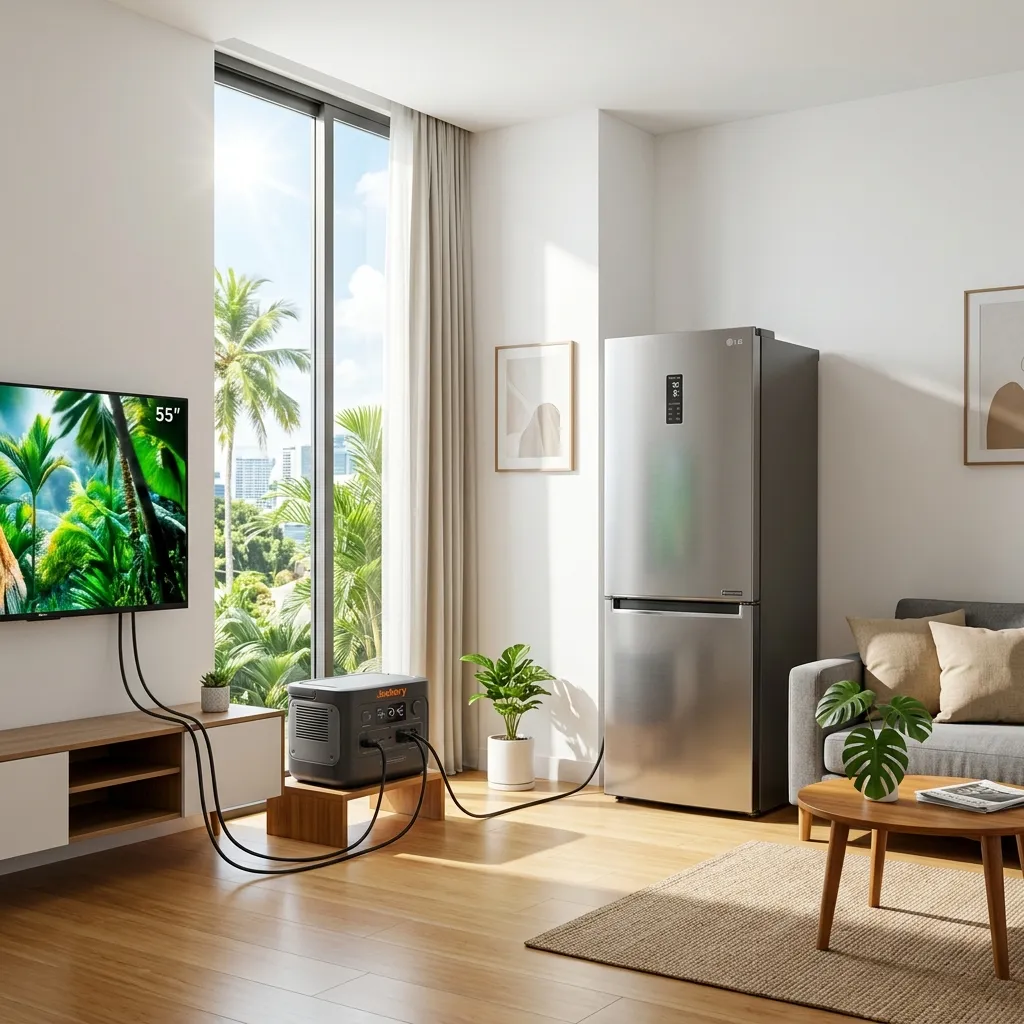
For apartment and condo residents in Puerto Rico where HOA rules and fire codes ban traditional gas generators, high-capacity portable power stations are the only legal and safe solution. They emit zero fumes, run silently, and can power a refrigerator and an inverter air conditioner simultaneously. Paired with folding solar panels on a balcony, they provide a reliable, sustainable, and legal backup power system for hurricane season.
If you are searching for the best generator for apartment or condo living in Puerto Rico, navigating HOA rules, fire regulations, and finding a silent, zero-emission generator alternative is essential. Check out our comprehensive Apartments Backup Power Guide for more details. Living in a high-rise condominium in San Juan, Isla Verde, or Guaynabo offers ocean views, but when the Puerto Rico grid fails—whether from a LUMA rolling blackout (“relevo de carga”) or a category 4 hurricane—apartment living becomes a severe liability.
Unlike homeowners who can install 15,000-watt diesel generators in their yards, apartment residents are strictly bound by building rules and local safety codes. Gas and diesel generators are universally banned on balconies due to the fatal risk of carbon monoxide poisoning, noise pollution, and fire hazards.
According to the CDC’s Carbon Monoxide poisoning data, hundreds of people die annually in the U.S. from carbon monoxide poisoning caused by improper generator use during outages. Operating any combustion generator inside or on balconies within 20 feet of windows/doors is extremely hazardous. Read the CDC Carbon Monoxide Prevention Guide for safety protocols.
To keep your groceries from spoiling, stay connected, and run an air conditioner to beat the tropical heat, you must invest in a heavy-duty LiFePO4 battery power station.
1. The Multi-Family Power Crisis in Puerto Rico
When the power goes out in a Puerto Rico apartment building, the challenges are immediate and compounded:
- Water Interruption: Many condo buildings rely on electric pumps. When the grid fails, the water pressure drops to zero shortly after.
- Extreme Heat: Concrete walls act as thermal batteries, absorbing heat during the day and radiating it indoors at night, creating unsafe temperatures.
- No Elevators: Lugging heavy fuel cans up 10 flights of stairs to refuel a generator is not only exhausting but highly dangerous.
A high-capacity portable power station acts as a personal power plant. It sits quietly in your living room or closet, ready to supply instant power when the grid collapses.
2. Balcony Safety and local Fire Codes (NFPA 1)
The Puerto Rico Fire Department (Cuerpo de Bomberos) enforces NFPA 1 (Fire Code), which strictly prohibits the operation and storage of combustion engines (such as gasoline, propane, or diesel generators) on balconies or close to residential building openings.
Section 11.7.2 of NFPA 1 states that portable generators must not be operated on balconies or within 20 feet of any building opening. Violating this code carries steep fines, HOA eviction notices, and severe civil liability. Storing highly flammable gasoline inside an apartment or in a balcony storage closet is also a direct violation of safety rules.
For comparison, see our guides on inverter vs conventional generators and solar vs gas generators.
3. The Balcony Solar Setup: Rules & Wind Hazards
The biggest question apartment residents ask is: “How do I recharge my battery if the grid is down for weeks after a hurricane?”
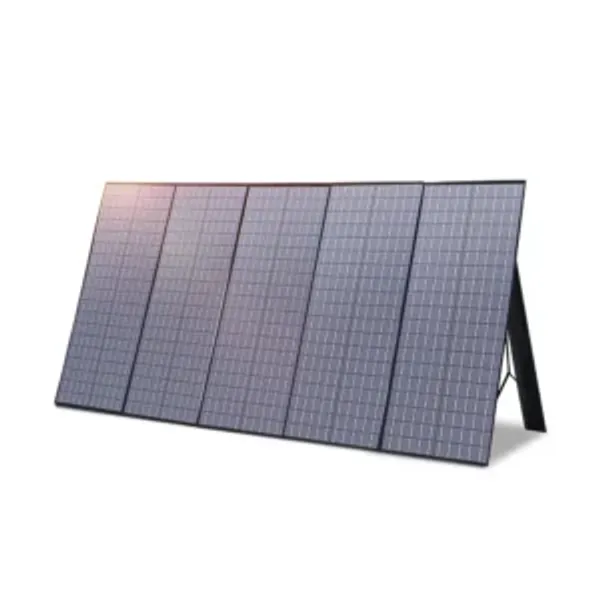
The solution is a Balcony Solar Setup. Instead of permanent roof installations, you can drape high-efficiency, folding solar panels over your balcony railing.
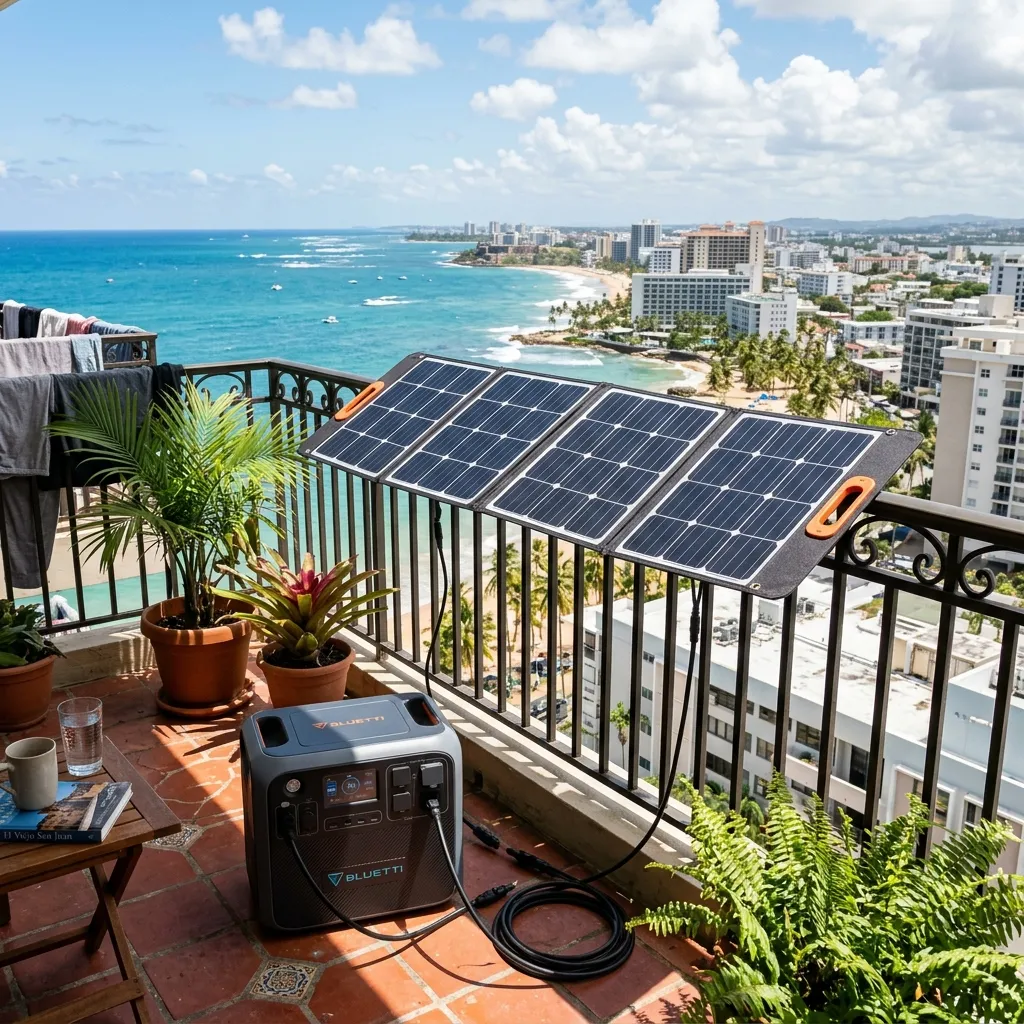
BALCONY SOLAR — Recharging a battery power station using folding panels on a PR apartment balcony.
Balcony Solar Best Practices:
- Peak Sun Hours: Puerto Rico receives an average of 4.5 to 5.5 peak sun hours daily. However, due to balcony shading and vertical mounting angles, expect to capture about 50% to 60% of the panel’s rated capacity. Size your panels accordingly.
- Secure Anchoring: Balconies in coastal areas like Condado and Isla Verde experience strong wind gusts. Panels must be securely anchored using heavy-duty, UV-resistant zip ties or carabiners attached to the structural metal railing.
- Wind Safety Protocol: Never leave panels deployed during storm warnings. In winds exceeding 30 mph, solar panels become dangerous sails and projectiles. You must bring them indoors immediately.
To estimate your recharge times based on balcony dimensions and shading, use our solar sizing calculator.
4. Apartment Appliance Power Requirements
To choose the right size battery, you must calculate the startup surge and running wattage of your essential apartment appliances:
| Appliance | Running Watts | Starting Surge Watts | Priority Level |
|---|---|---|---|
| Inverter Refrigerator | 150W – 200W | 1,200W (Compressor Startup) | Critical (Food Preservation) |
| Inverter AC (9,000 BTU) | 500W – 800W | 1,200W | High (Sleep & Comfort) |
| CPAP Machine | 80W – 120W | 120W | Critical (Medical Need) |
| Wi-Fi Router & Modem | 15W – 25W | 25W | Critical (Communication) |
| Ceiling or Standing Fan | 50W – 75W | 100W | High (Ventilation) |
| Laptops & Phone Chargers | 30W – 90W | 90W | High (Work & Info) |
Note: Traditional, non-inverter air conditioners have massive startup surges (often over 3,000W) that will instantly trip most portable power stations. We strongly recommend upgrading to inverter appliances for battery compatibility.
Calculate your total load with our Interactive Wattage Calculator.
5. Best Generators (Battery Stations) for PR Apartments in 2026
We have analyzed output wattage, solar recharge rates, battery chemistry, and warranty coverage to select the top battery power stations for Puerto Rico apartment living.
🏆 1. Best Heavy-Duty Backup: ALLPOWERS R4000
For complete apartment independence, the ALLPOWERS R4000 is the ultimate powerhouse. With a massive capacity and industrial-grade output, it is built to run heavy-duty appliances including inverter AC units and refrigerators simultaneously.
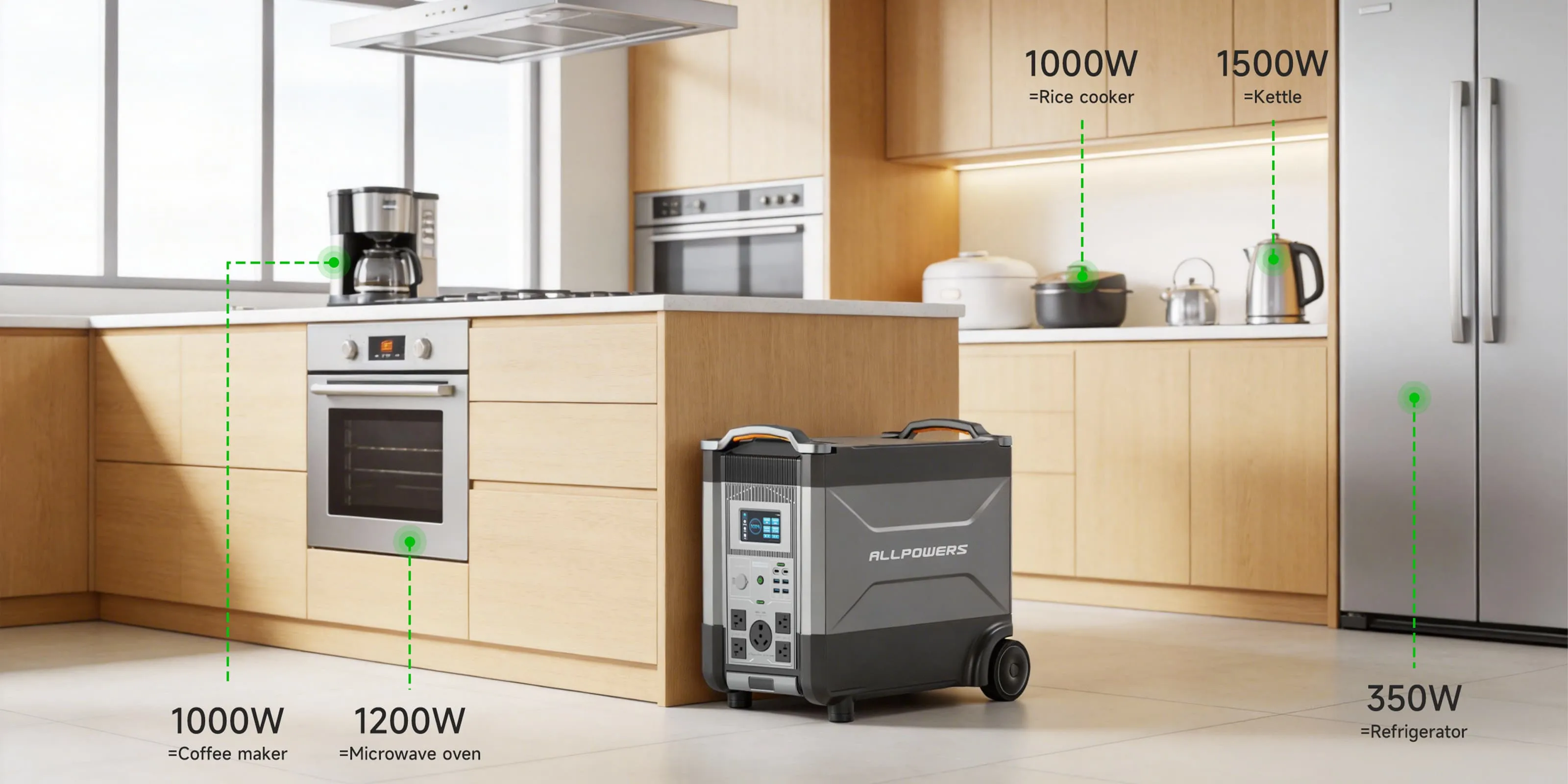
HEAVY-DUTY BACKUP — The ALLPOWERS R4000 running a refrigerator and portable AC unit in a San Juan apartment.
- Capacity: 3,600Wh (expandable up to 21.6kWh with expansion batteries)
- Output: 4,000W Continuous (6,000W Surge) - Pure Sine Wave
- Battery Type: LiFePO4 (6,000+ life cycles to 80% capacity)
- Solar Input: 2,000W Max (recharges in under 2 hours in peak sun)
- UPS Mode: Yes, < 15ms automatic transfer rate
- Price: $2,074.16 (Pair with $574.73 400W Solar Panel)
Why it is perfect for PR apartments: The R4000 features a built-in touch screen and Wi-Fi/Bluetooth app control to monitor your battery usage in real-time. Its 4,000W output handles the heavy startup surges of inverter refrigerators and air conditioners without breaking a sweat, while its LiFePO4 cells are rated to last over 15 years of daily use.
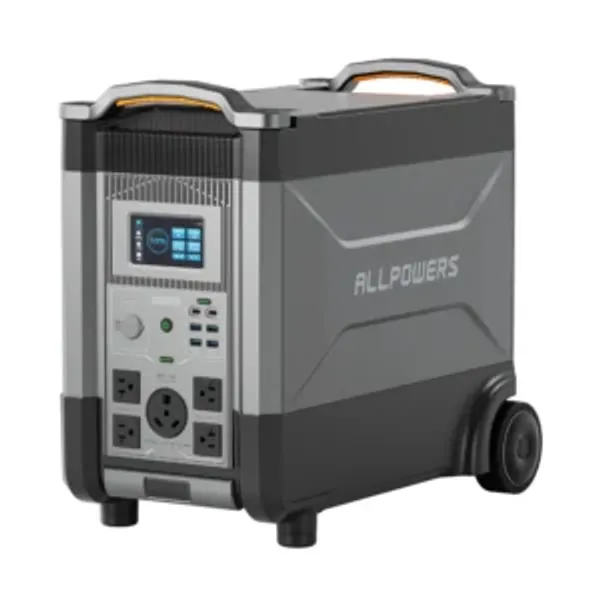
ALLPOWERS 6000 Watt Surge 3456Wh LiFePO4 Inverter Solar Portable Power Station R4000 Lite
⚡ 2. Best Balanced Option: EcoFlow Delta 2 Max
EcoFlow is a household name in battery storage, and the Delta 2 Max strikes the perfect balance between weight, capacity, and industry-leading charge speeds.
- Capacity: 2,048Wh (expandable to 6.1kWh)
- Output: 2,400W Continuous (4,800W Surge)
- Battery Type: LiFePO4 (3,000+ cycles to 80% capacity)
- Solar Input: 1,000W Max (dual MPPT inputs for balcony panels)
- UPS Mode: Yes, < 20ms automatic transfer rate
- Price: $1,298.75
Why it is perfect for PR apartments: The Delta 2 Max can charge from 0% to 80% in just 43 minutes when plugged into a wall outlet, which is a lifesaver when you only have a brief window of grid power between rolling blackouts. At 53 lbs, it is also relatively easy to relocate around your apartment.
Product not found: ecoflow-zppmr350-us
💰 3. Best Value Option: ALLPOWERS R1500
If you need reliable backup power for your refrigerator, Wi-Fi, and fans but are on a budget, the ALLPOWERS R1500 offers unbeatable value in a compact, modern package.
- Capacity: 1,056Wh (LiFePO4 battery - 3,500+ life cycles to 80% capacity)
- Output: 1,800W Continuous (3,200W Surge) - Pure Sine Wave
- Solar Input: 650W Max
- Weight: 36.8 lbs (highly portable)
- UPS Mode: Yes, < 15ms automatic transfer rate
- Price: $997.67 (Pair with $398.15 200W Solar Panel)
Why it is perfect for PR apartments: The R1500 uses ultra-durable LiFePO4 cells that last over 10 years of daily use. It offers a 1,800W continuous output that handles refrigerator startups and fans easily, and can be charged using the folding ALLPOWERS 200W panel directly from a balcony.
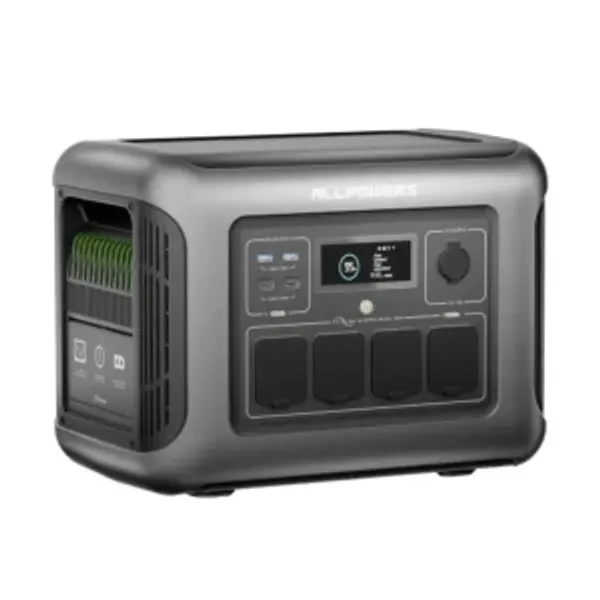
ALLPOWERS 3200 Watt Surge 1056Wh LiFePO4 Portable Power Station R1500Lite
Product not found: allpowers-sp033
6. Comparative Analysis: Gas vs. Battery vs. Balcony Hybrid
Before buying, review how these options compare under real Puerto Rico operating conditions:
Gas/Propane Generators
- Illegal: Violates NFPA 1 fire code and building HOA rules.
- Lethal: High risk of carbon monoxide poisoning on balconies.
- Maintenance: Requires storing gasoline, oil changes, and pull-starts.
- Noise: Loud operation (65+ dB) will cause neighbor complaints.
Standalone Battery Stations
- 100% Legal: Zero emissions, silent, and approved for indoor use.
- Zero Maintenance: Plug-and-play, no fuel, no oil, no spark plugs.
- UPS Protection: Automatically protects electronics during blackouts.
- Balcony Charging: Quietly recharges via folding solar panels.
Frequently Asked Questions
Is it legal to have a generator in an apartment in Puerto Rico?
Gasoline, propane, and diesel generators are illegal to operate on apartment balconies or indoors under local fire codes (NFPA 1) due to carbon monoxide and fire risks. Battery-powered portable power stations (sometimes called solar generators) are 100% legal, safe, and silent for indoor and balcony use.
Will a portable power station run an air conditioner?
Yes, provided the power station has a continuous output rating of at least 2,000W and you are running a modern inverter air conditioner (such as a 9,000 BTU mini-split or inverter window unit). Traditional air conditioners have high starting surges that will overload smaller battery stations.
How do I charge a power station from an apartment balcony?
You can drape folding solar panels over your balcony railing and plug them directly into the solar charging port (XT60 or MC4) of your power station. Ensure the panels are securely anchored with heavy-duty zip ties to prevent wind hazards, and bring them inside if wind speeds exceed 30 mph.
What is the lifespan of these batteries?
Battery stations utilizing LiFePO4 (Lithium Iron Phosphate) chemistry, such as the ALLPOWERS R4000 and EcoFlow Delta 2 Max, typically last between 3,000 and 6,000 charge cycles before dropping to 80% capacity. If used every single day, they will last 10 to 15+ years.
Protect Your Apartment from LUMA Blackouts
Stop throwing away spoiled food and sleeping in the tropical heat. Explore our curated selection of high-capacity portable power stations, shipped fully insured directly to your door in Puerto Rico.